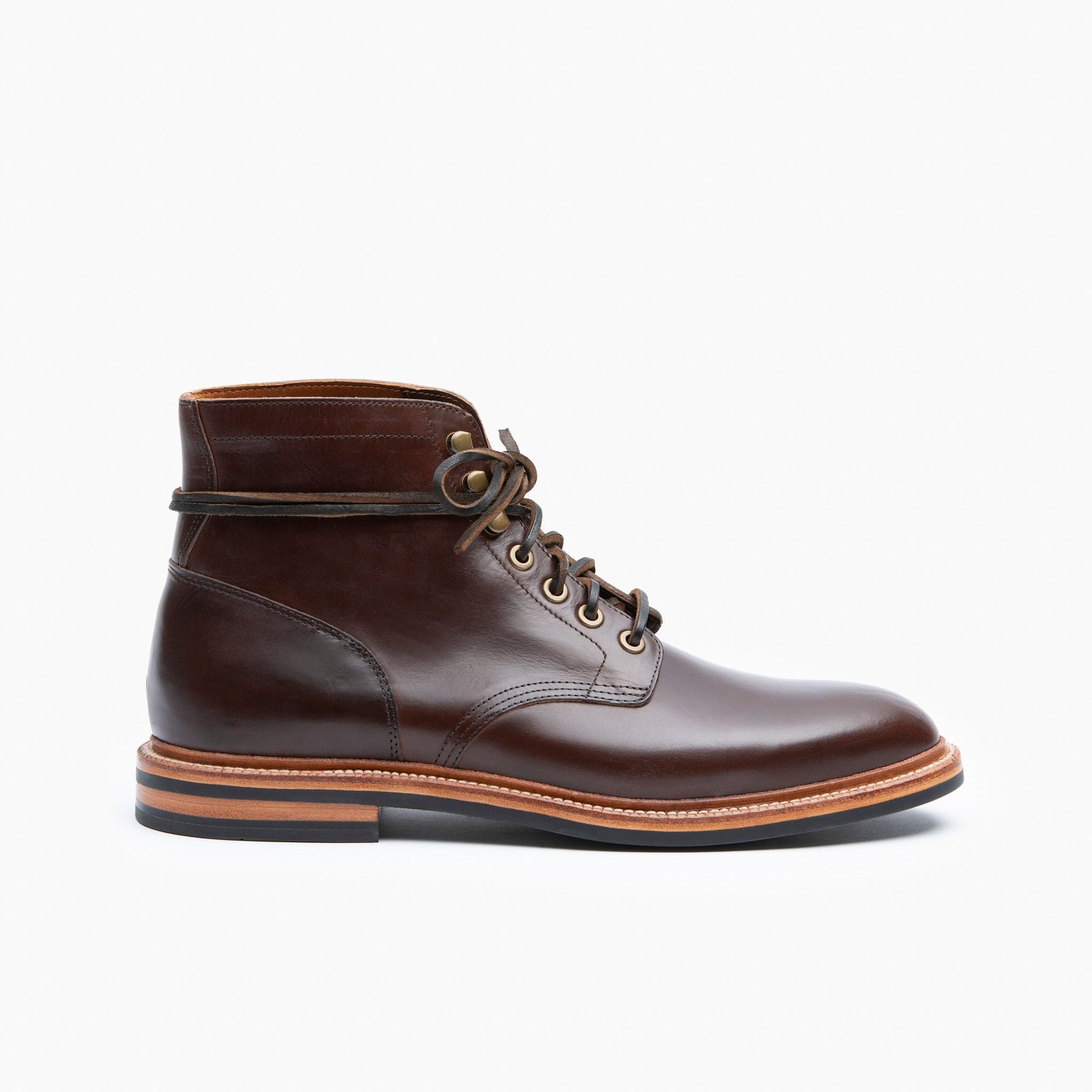
Truman Boot Co. Guide: The 79 Last, Bench-Crafted Service Boots and Rugged Leathers
An in-depth guide to Truman Boot Company's Oregon workshop: dissecting the signature 79 last, heavy Goodyear welt construction, heavyweight leathers from Seidel and C.F. Stead, and practical sizing for rugged everyday service boots.
The Pacific Northwest ethos: heavy bench craft and utilitarian design
Founded in 2014 by Vince Romano, Truman Boot Co. emerged out of a desire to create unapologetically heavy-duty workwear footwear that bridges the gap between delicate metropolitan dress boots and cumbersome logging boots. After outgrowing earlier operations in Pennsylvania and Colorado, Truman established its dedicated manufacturing workshop in Eugene, Oregon, placing itself firmly in the heart of the Pacific Northwest footwear tradition.
Unlike heritage brands that lean heavily on legacy manufacturing contracts, Truman operates on a small-batch, direct-to-consumer model. This independence gives the Oregon team freedom to curate rare tannages, maintain tight quality control across small cutting tables, and engineer boots with thick structural components that prioritize mechanical longevity over rapid factory throughput.
The anatomy of the 79 Last: proportion, arch support and foot geometry
At the core of Truman's reputation is the 79 Last—the workshop's definitive service boot silhouette. Developed to balance all-day support with clean aesthetic lines, the 79 last features a gently rounded almond toe box, a tailored waist that hugs the medial longitudinal arch, and a snug heel pocket that locks the calcaneus securely in place.
Unlike bulbous traditional Pacific Northwest work lasts that can overwhelm slim or straight-cut trousers, the 79 last presents a low-profile, structured forefoot. It provides ample room across the metatarsal heads without visually sprawling, creating an adaptable silhouette that pairs effortlessly with heavyweight selvedge denim, heavy twill chinos, or chore coats.
Flagship model: 79 Last Service Boot in Tobacco Snakebite
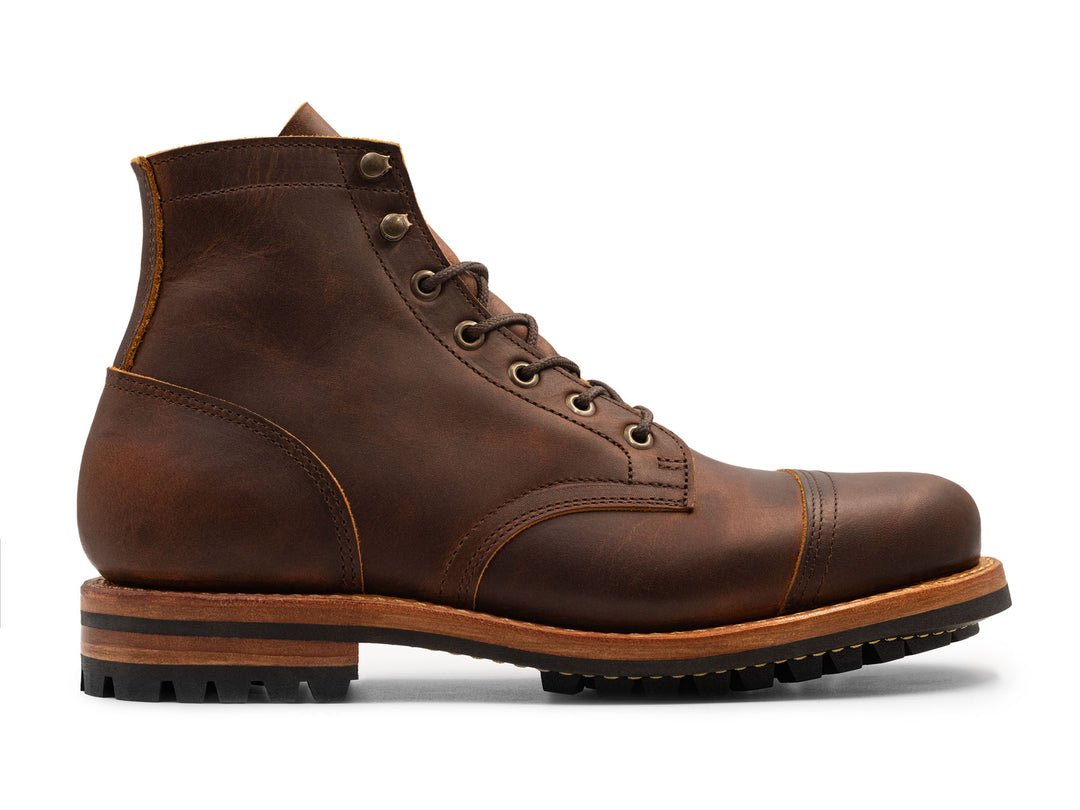
If one model encapsulates Truman's design philosophy, it is the 79 Last Service Boot in Tobacco Snakebite. Sourced from Seidel Tannery in Milwaukee, Wisconsin, Snakebite is a dense 2.0–2.2 mm (5–5.5 oz) pull-up bovine leather saturated with heavy oils and waxes. When bent, stressed, or creased, the oils shift under tension, creating dynamic caramel and rich espresso undertones that develop dramatic personal patina within weeks of wear.
Configured with a structured toe cap, antique brass eyelets, five top speed hooks, and a gusseted tongue to keep out gravel and road grit, the boot is mounted atop Truman's heavy-duty Eugene lug sole. The Eugene sole—engineered in collaboration with Vibram—delivers immense claw-like grip on wet asphalt, slush, and loose gravel while maintaining a clean, balanced profile.
- Truman Boot Co. — 79 Last Service Boot in Tobacco SnakebiteTruman's signature 79 last service boot crafted with 5 oz Seidel Tobacco Snakebite pull-up leather, Goodyear welt and Eugene lug sole.
Heavyweight leather curation: Seidel, Horween and C.F. Stead
Rather than relying on uniform, heavily finished hides, Truman builds its reputation on rotating micro-batches of world-class leathers. In addition to Seidel's resilient work hides, Truman frequently cuts Horween Chromexcel, Horween Dublin, and the famed Java Waxed Flesh. Waxed flesh utilizes a roughout leather saturated with hot waxes, providing supreme abrasion resistance and near-total water resistance that buffs to an intense patina as the nap slowly peaks through.
For textured suede aesthetics, the workshop sources heavyweight ramblers and kudu leathers from Leeds-based tanner C.F. Stead. The Coach Rambler, for example, features shrunk-grain bovine hide with dramatic natural scarring and surface variegation, treated with water-resistant agents that perform admirably in wet autumn climates.
- Truman Boot Co. — 79 Last Service Boot in Java Waxed FleshHeavy roughout leather from Horween saturated in heavy wax with Goodyear welt and Commando lug traction.
- Truman Boot Co. — 79 Last Service Boot in Coach RamblerShrunk-grain full-grain leather from C.F. Stead with distinctive pebble texture and rugged all-weather resilience.
Underfoot architecture: Goodyear welts, veg-tan midsoles and Eugene lug traction
While Truman experimented with stitchdown construction in its early Pennsylvania days, the brand has standardized on a robust 270-degree Goodyear flat or storm welt. Goodyear welting provides exceptional lateral stability, clean edge trimming, and universal ease of resoleability at any traditional repair bench.
Crucially, Truman builds without synthetic foam, plastic shanks, or fibreboard filler. Beneath the foot lies a solid 5 mm vegetable-tanned leather insole that gradually absorbs body heat and moisture to mould permanently to the unique contours of the wearer's foot. A full-thickness veg-tan leather midsole and a ribbed tempered steel shank provide rigid torsional support, topped by a heavy Vibram or Eugene lug rubber outsole.
Sizing guidance and the break-in reality
Sizing the Truman 79 last is straightforward once Brannock parameters are understood. For normal or low-volume D-width feet wearing standard boot socks, Truman recommends taking a half-size down from your measured Brannock size (for example, taking a US 9.5D if you measure US 10D). For wider feet (E width) or those who prefer heavyweight wool socks, ordering true to Brannock size ensures sufficient forefoot width and instep volume.
Wearers must anticipate a genuine break-in period. Because Truman specifies dense 5 oz leathers, thick leather heel counters, and unyielding 5 mm leather insoles, the first 25 to 40 hours of wear will feel unyielding. As the leather insole beds down and the ankle leather flexes, the boot transitions into an exceptionally supportive, glove-like shell that reduces foot fatigue over long days on hard surfaces.
Maintenance, longevity and cobbler resoleability
Maintaining Truman's rugged leathers requires a measured touch rather than excessive product application. For pull-up leathers like Tobacco Snakebite, regular dry brushing with a stiff horsehair brush is sufficient to lift road dust and redistribute surface oils. Heavy conditioning should be used sparingly—once or twice a year with a light balm such as Bickmore Bick 4 or Venetian Cream to preserve the hide's natural pull-up character without darkening or oversaturating the fibres.
For Waxed Flesh variants, reapplying a specialist wax paste like Otter Wax or Saphir Dubbin Graisse to worn areas restores water repellency. Thanks to the 270-degree Goodyear welt and solid leather midsole, a local cobbler can easily replace the outsole repeatedly over decades without compromising the core upper or internal footbed.
Sources & useful links
- Truman Boot Co. Official Sizing and Last Guide
- Truman Boot Co. Tobacco Snakebite Service Boot Specifications
- Truman Boot Co. Java Waxed Flesh Service Boot Specifications
- Truman Boot Co. Coach Rambler Service Boot Specifications
- Truman Boot Co. Workshop Heritage and Craft Principles
- Horween Leather Company: Waxed Flesh and Full-Grain Tannages
Keep exploring