Leather Types, Explained: Full-Grain, Suede, Nubuck and More
A plain-English guide to the surface, structure and trade-offs behind the leather labels you see on shoes, bags and jackets.
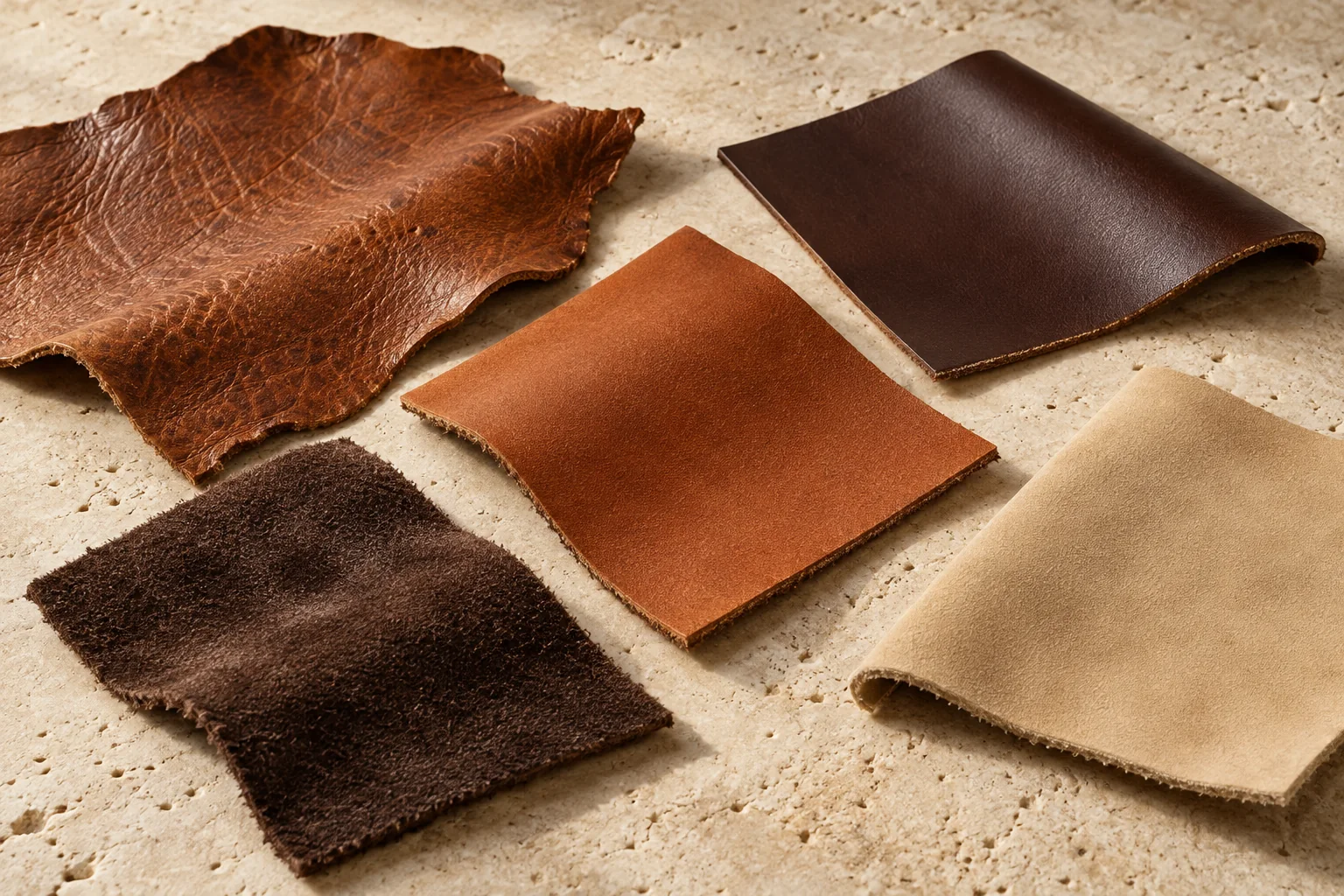
Start with the hide, not the hype
Leather names can describe different things: which part of a hide was used, how its surface was finished, or how it feels. That is why a label such as “top-grain” cannot, on its own, tell you whether a bag will be hard-wearing or whether a shoe will age beautifully. Look for a specific description of the material and finish, then consider the product’s construction and intended use.
The grain is the outer surface of the hide. Beneath it are lower layers with a different fibre structure. A hide may be divided into layers, and each layer can be finished in several ways. The terms below are useful starting points, but finishing, thickness, tanning and care all influence how a finished item performs.
Full-grain: the natural grain remains
Full-grain leather retains its grain surface without corrective sanding to remove marks. Natural variation, small scars and changes in texture may therefore remain visible. Some people value those features because they make each piece distinct; others prefer a more uniform look. A full-grain label does not automatically mean that the leather is thick, supple, responsibly sourced or especially durable. Those qualities depend on the hide, tannage, finishing and how the maker uses it.
A lightly finished full-grain leather may show more of its natural character and can develop a changing surface with use. A heavily coated finish can look more consistent and resist some everyday marks, while hiding more of that character. Neither choice is universally better: a frequently handled work bag has different needs from a dress shoe kept for occasional wear.
Top-grain and corrected-grain
“Top-grain” is commonly used for leather from the upper part of a hide, including leather whose grain has been lightly sanded or corrected. The exact way the term is used varies across the market, so read the product’s full material description rather than assuming it means “best quality”. Corrected-grain leather has had part of the grain surface removed by buffing or a similar process, then receives a finish that may add colour, texture or a more even appearance.
Correction is not a defect in itself. It can make a hide more consistent and suit a design where an even colour matters. It does change the surface, and a thick applied coating may behave differently from a more open finish as it creases or wears. Ask the maker what the finish is, whether the leather is coated, and how it should be cleaned.
Suede and nubuck: two different napped surfaces
Suede usually refers to leather with a soft, raised nap made from a split or from the flesh side of a hide. Nubuck is made by buffing the grain side to create a fine, velvety surface; the original grain pattern can still be visible. Both can feel soft and look informal, but their open nap can show water spots, dust and rubbing more readily than a smooth finished leather. A suitable brush and product matter, and a treatment intended for smooth leather may flatten or darken the nap.
“Split” describes a lower layer separated from the grain split; it is not a finish by itself. A split can be left with a suede-like nap or receive a surface coating. That is one reason to check whether a product is described as suede, coated split or another material rather than relying on a single photograph.
Leather examples: smooth grain, roughout and suede
Vintage describes age or style, not a leather grade. A new boot can borrow a vintage look, while a pre-owned vintage pair needs its own condition check; neither label tells you whether the leather is full-grain, corrected or suede. These current models illustrate different visible surfaces, not a quality ranking.
- Red Wing Heritage — Classic Moc 8836 in Chocolate MuleskinnerAn official example of roughout leather; compare its napped surface with smooth-grain descriptions.
- Clarks Originals — Desert Boot in Black SuedeA familiar suede example. Colour and regional stock can vary; use the maker’s material details for the selected version.
Choose for the job
For a bag used every day, consider how easily its surface can be cleaned, how it will carry weight and whether the maker offers repairs. For boots, ask about leather thickness, lining, sole construction and the conditions the maker considers suitable. For a refined shoe, a smooth finish may be easier to brush clean, while suede can be a practical option when you are comfortable with regular brushing and some visible change.
Treat claims such as “premium”, “genuine” or “natural” as incomplete descriptions. Useful questions are: which part of the hide is used; is the grain sanded; what finish is applied; where was the leather tanned; and what care does the maker recommend? A direct answer is more valuable than a grade-sounding adjective. In short, learn the material, then judge the whole object: cut, stitching, hardware, fit, finish and the possibility of repair.