How to Care for Leather Boots: A Simple Routine That Works
A practical routine for cleaning, drying, conditioning and storing boots without over-treating the leather.
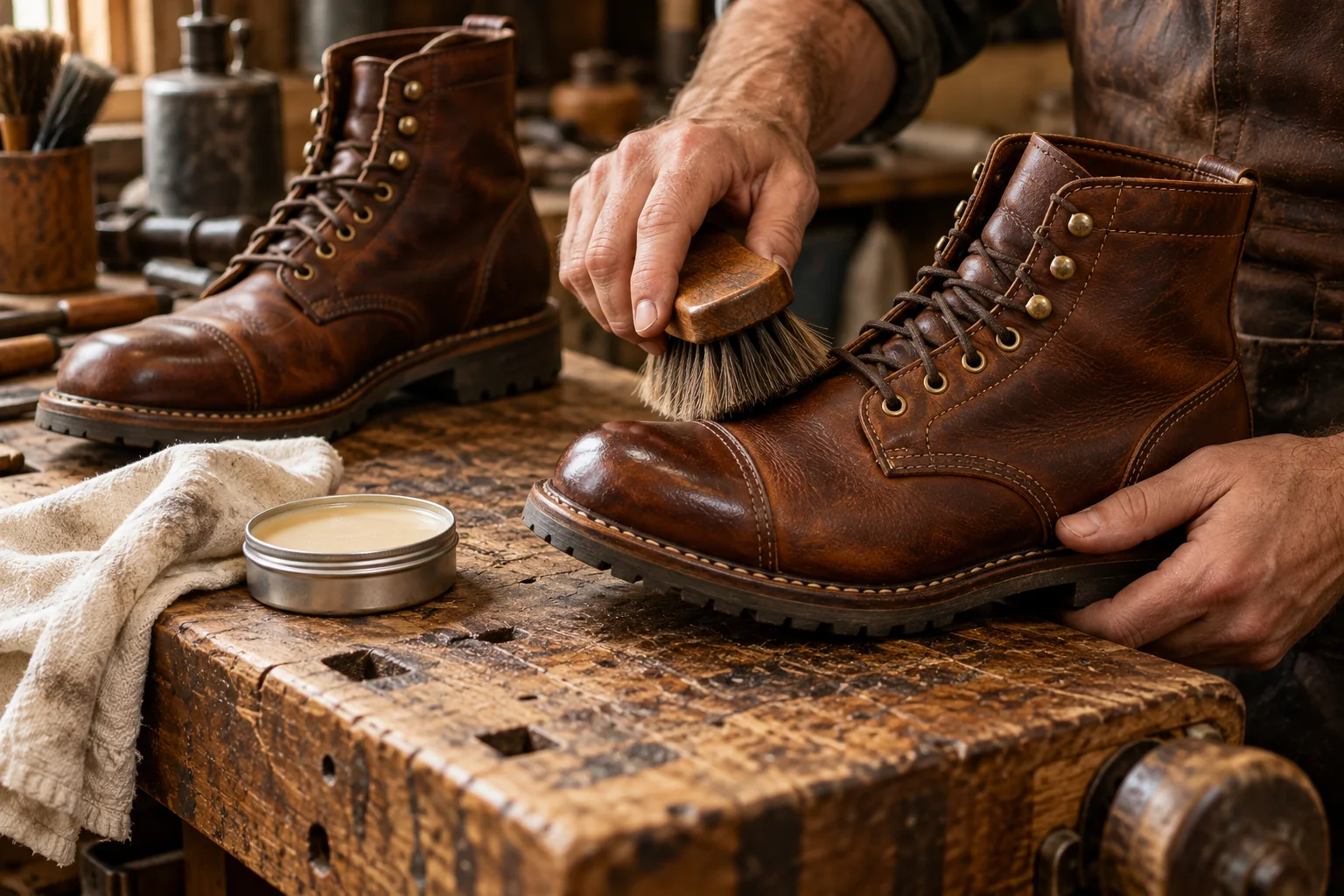
Begin with the boot you own
Leather boots do not all need the same products. Smooth finished calf, waxed leather, roughout, suede and nubuck respond differently to water, oils and creams. Start with the maker’s care instructions and identify the finish if you can. If the label is missing, test any cleaner or conditioner on a small, hidden area and allow it to dry before treating the visible upper.
A useful maintenance routine is deliberately modest. After ordinary wear, let the boots air, brush away dry dust and check for grit around the welt and sole. Clean only when they are dirty. Conditioning is occasional upkeep, not a daily ritual: applying too much can darken leather, soften it more than intended or leave a surface that attracts dirt.
Brush first, then clean gently
Remove the laces so you can reach the tongue and eyelet area. Use a soft brush or dry cloth to lift loose dirt. A slightly damp cloth may be enough for a smooth leather mark; avoid soaking the upper. If you use a leather cleaner, choose one compatible with the finish, follow its directions and use a small amount. A household detergent, alcohol wipe or aggressive solvent can strip colour or finish.
For suede and nubuck, let mud dry before brushing it away with a suitable suede brush. Brush lightly and in more than one direction to raise the nap. A suede eraser can help with a small dry scuff, but pressure and aggressive rubbing may change the surface. Do not apply ordinary shoe cream or wax unless the product is specifically intended for that leather.
Dry slowly; condition sparingly
If boots become wet, remove the insoles if they come out, loosen the laces and let the boots dry at room temperature with air able to circulate. Keep them away from radiators, hairdryers, fires and strong direct sunlight. Rapid heat can dry leather unevenly and contribute to stiffness or cracking. Stuffing the boots loosely with clean paper can help draw out moisture; replace the paper when it becomes damp.
Once the leather is clean and dry, apply a compatible conditioner only if the maker recommends it or the leather looks dry. Follow the product instructions, use a thin layer and allow it to absorb before brushing or buffing. On a boot with a waxed or heavily finished surface, a traditional conditioner may alter the appearance. Check first. A little product is easier to add later than to remove.
Keep the shape and mind the sole
After wear, cedar shoe trees can help a boot keep its shape and manage some moisture, but they are not a substitute for drying. Avoid forcing a shoe tree into a boot that is still wet or feels tight. Store boots in a dry, ventilated place, away from prolonged heat and sunlight. If you rotate between pairs, each one gets time to air before its next wear.
Inspect the heel, outsole and stitching periodically. A worn heel top piece can often be replaced before the rest of the sole is exhausted; a cobbler can advise whether a resole is appropriate for the particular construction. Not every boot is designed to be resoled, and a stitched seam alone is not proof that any repair will be straightforward. Ask the maker or a repairer before damage spreads.
Care products are examples, not a universal kit
A vintage boot may have an unknown finish, old polish or previous treatment. Identify the leather and follow its maker’s care advice before applying anything; test first in a hidden area and avoid treating suede or nubuck with smooth-leather cream.
- Red Wing Heritage — Smooth-Finished Leather Care KitThe maker lists cleaner, leather cream, protector and cloth for smooth-finished leather. Match products to the boot’s actual finish.
- Saphir — RenovateurA care option the maker specifies for fine smooth leathers; it is not a suede or nubuck product.
A quick routine
The simplest dependable pattern is: brush after wear, let damp boots dry naturally, clean marks with a method intended for the finish, condition only when needed, and store them away from heat. If you are unsure what the leather is, pause before applying a strong product. The boot’s care label and manufacturer instructions should take priority over a generic internet recipe.