Boots Made in Portugal: Shoemaking Heritage, Guimarães Workshops and Craft Benchmarks
Why northern Portugal has become a preeminent European centre for Goodyear-welted and Blake-Rapid footwear, examining traditional cordwaining centres, leather sourcing and distinctive makers.
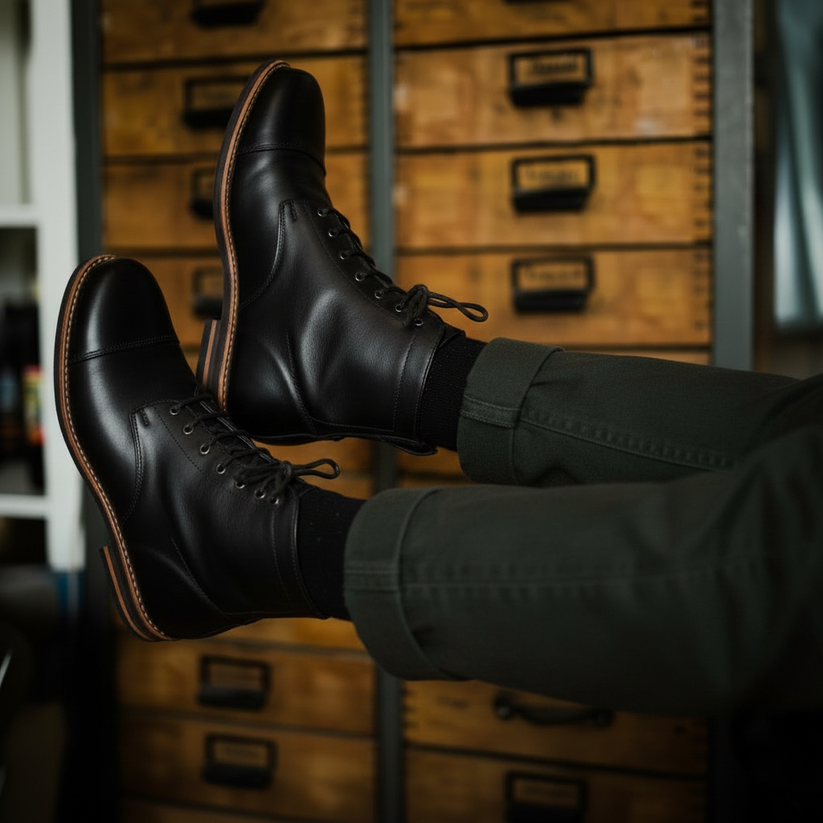
Northern Portugal's cordwaining clusters: history and regional mastery
For decades, international footwear conversations focused almost exclusively on Northamptonshire in England or the Marche region in Italy. Yet over the past fifteen years, connoisseurs of heritage footwear have increasingly looked to northern Portugal as the premier European hub for artisanal leather boots.
Centred around historic towns such as Guimarães, Felgueiras, and São João da Madeira, Portugal's footwear industry is built upon generations of family-run workshops and deeply integrated tanning networks. Unlike modern offshored manufacturing hubs that prioritise sheer volume, Portuguese workshops excel in small-batch production, skilled hand lasting, and traditional stitched constructions—offering exceptional European craftsmanship without the inflated luxury markups common in other capitals.
Old Mulla Tâmega: Guimarães craftsmanship and Blake-Rapid resilience
Located in the historic cordwaining city of Guimarães, Old Mulla is an artisanal footwear brand whose boots are handcrafted by the George family. Their Tâmega Boot with Black Rubber Sole represents an ideal balance of Portuguese workwear heritage and all-weather urban utility.
Built on an anatomically balanced last, the Tâmega Black Rubber Sole features supple, 100% full-grain Portuguese leather uppers with a full leather interior lining. Rather than relying on rigid, stiff sole assemblies, Old Mulla employs double-row Blake Rapid construction: an interior Blake stitch anchors the leather insole and upper to a sturdy leather midsole, while a heavy Rapid lockstitch bonds the midsole directly to a durable, treaded black rubber outsole. This engineering delivers immediate step-in suppleness without requiring painful break-in periods, while allowing any local cobbler to easily resole the boots when worn down. Verified customer reviews on Judge.me and Etsy praise the Tâmega's comfortable arch support and tactile leather quality.
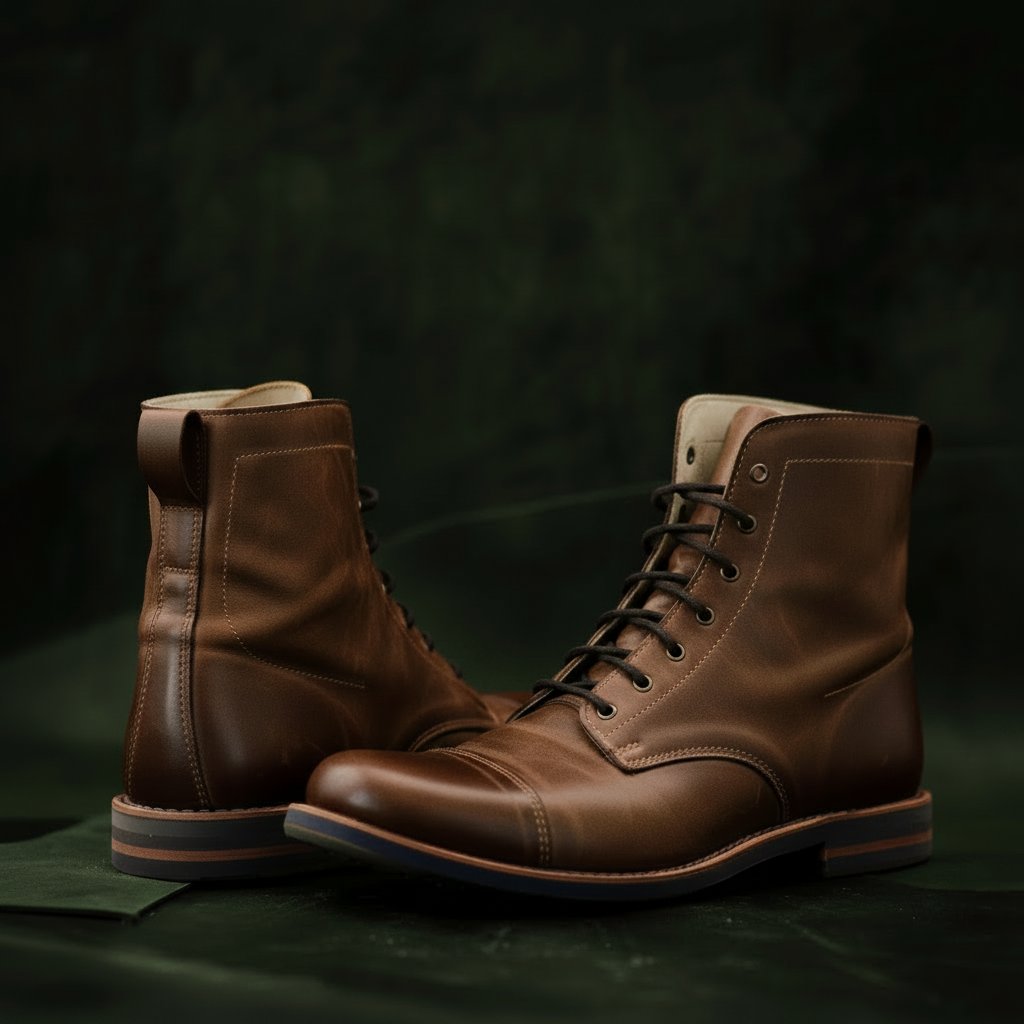
Carlos Santos: São João da Madeira Goodyear elegance
In São João da Madeira, Carlos Santos stands as one of the most respected names in Goodyear-welted European footwear. Established in 1942, the manufacture blends traditional bench welting with artisan hand-patina finishing.
Their 8866 Jumper Boot is an iconic example of high-grade Portuguese bench craft. Featuring fine French calfskin, a 360-degree Goodyear welt, and Dainite-style rubber studded soles, Carlos Santos boots demonstrate the meticulous edge-dressing, close-cut welts, and elegant European lasts that allow stitched boots to transition seamlessly between casual tailoring and weekend wear.
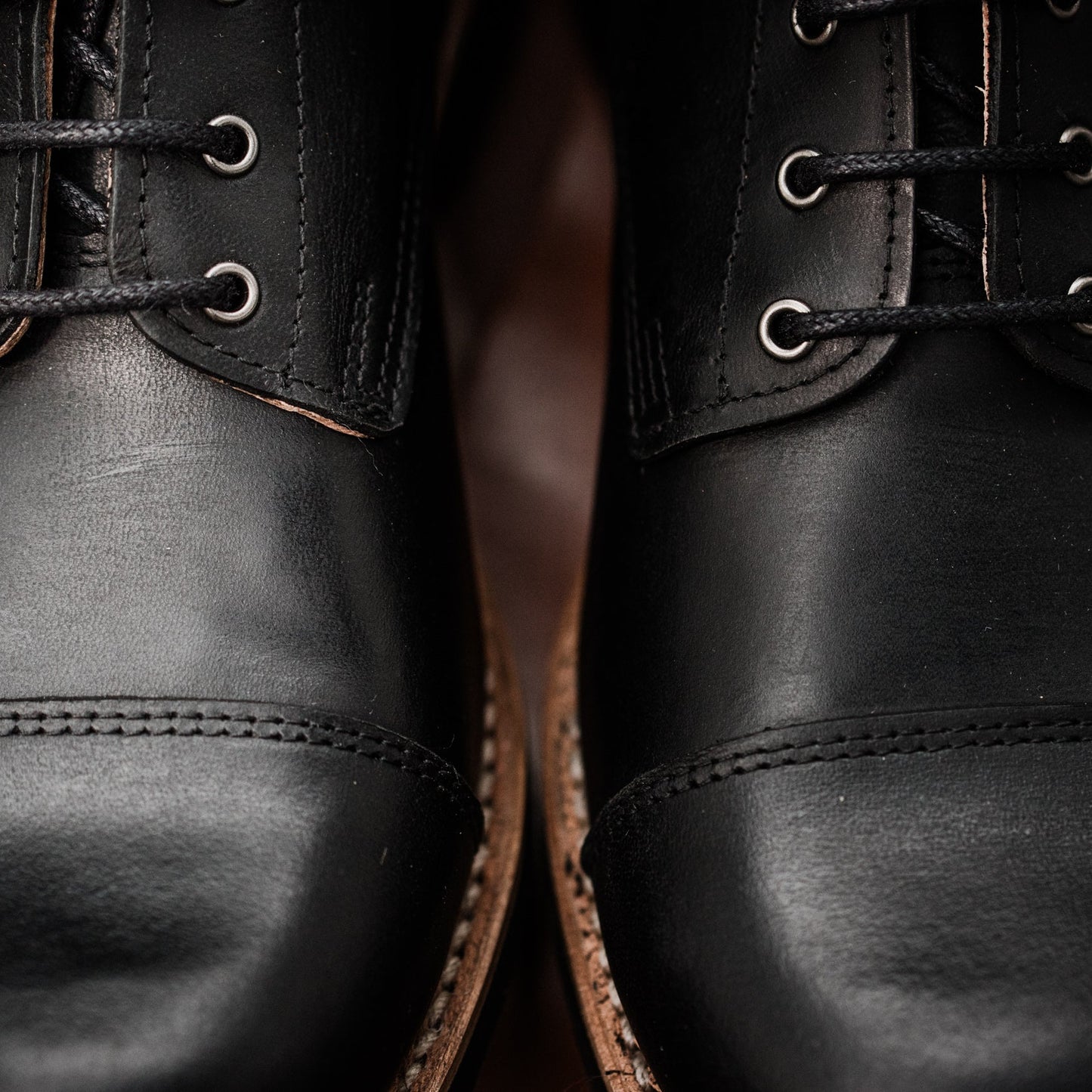
Urban Shepherd Boots: utilitarian workwear from Benedita
Further south in the shoemaking town of Benedita, Urban Shepherd Boots takes its inspiration from the rugged footwear historically worn by Portuguese shepherds and agricultural labourers. Their boots emphasise thick, oil-treated leathers and heavy-duty utility.
The Country Boot features dense 2.2mm natural Portuguese calfskin treated with natural oils, built with a heavy Blake Rapid construction and lugged rubber outsoles. With brass hardware and natural leather counters, it offers an authentic, rustic field profile designed to shrug off mud, gravel, and rough outdoor wear.
Why international buyers value Portuguese footwear
The rapid growth in demand for boots made in Portugal stems from several distinct structural advantages:
- Integrated regional supply chains: Portuguese workshops source premium hides, natural rubber soles, and brass hardware within tightly concentrated industrial clusters, reducing logistical overhead.
- Construction versatility: While Northampton focuses almost exclusively on Goodyear welting, Portuguese cordwainers master both Goodyear and Blake Rapid techniques, allowing for varied silhouettes and flexibility profiles.
- Ethical European production: Footwear manufactured in Portugal operates under strict European Union labour regulations and environmental leather-tanning standards (REACH).
- Direct-to-consumer value: By partnering directly with global buyers or selling through transparent web ateliers, Portuguese brands offer materials comparable to £500+ heritage names at significantly more accessible pricing.
Sizing and fit considerations for Portuguese footwear
Most Portuguese bootmakers design their footwear using standard European sizing (EU 40 to 46). Portuguese lasts tend to offer a standard European 'E' width—slightly more accommodating across the ball of the foot than traditional narrow British lasts, but more contoured through the arch and heel than broad American Pacific Northwest work lasts.
If you typically wear a UK 9 or US 10, an EU 43 will generally provide an ideal fit with medium-weight wool boot socks. For boots built with Blake Rapid construction, expect the supple leather insole to mould quickly to your footbed within the first five to seven wears.